Quantifying Heterogeneity in the Causal Impact of Abortion Restrictions
Abstract
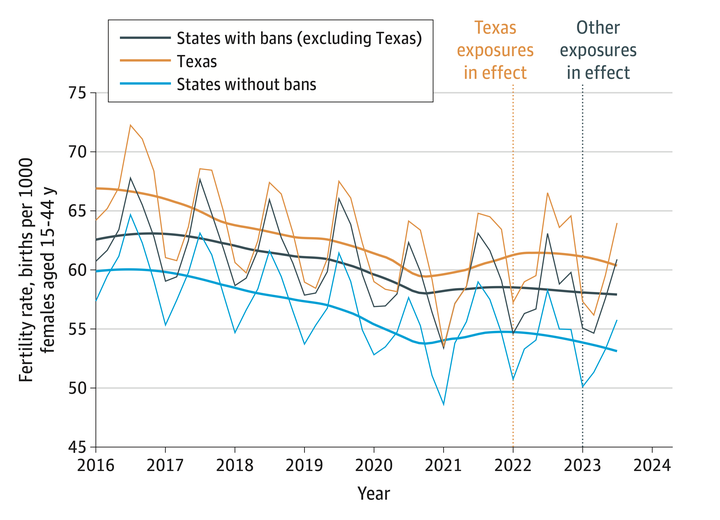
In these two papers, we develop statistical methods to characterize heterogeneity in the causal impact of abortion restrictions. We focus on the difficulties of quantifying the effects of restrictions on both birth rate and infant mortality rate in different states and demographic subgroups in the United States. Existing panel data methods are largely insufficient for quantifying these effects because 1) they are not appropriate for count data with missing or suppressed values, 2) do not leverage prior knowledge about similarities across subgroups, and 3) might lead to inconsistencies in the aggregated estimates of nationwide effects on abortion restrictions. We propose a Bayesian hierarchical factor model for count data with nonignorable missingness and demonstrate the value of our model by analyzing variability in the causal effects of post-Dobbs abortion restrictions across race, age, educational attainment and marital status in restricted states. After the implementation of these bans in 14 states, we find that fertility increased by 1.7% and infant mortality increased by 6%. These impacts were disproportionately felt among those with the greatest structural disadvantages and those in Southern states.